


In a world where your toaster might just be smarter than you, the Internet of Things (IoT) is revolutionizing everyday life. Enter the IoT controller, the unsung hero that keeps this tech marvel running smoothly. Imagine a gadget that can orchestrate your smart home like a maestro conducting a symphony, ensuring everything from your coffee maker to your security system plays in perfect harmony.
What Is An IoT Controller?
An IoT controller serves as the central hub for smart devices within a network. This controller communicates between various devices, ensuring they function harmoniously. Specific devices include sensors, appliance interfaces, and home security systems, all directed by the IoT controller.
Integration of devices occurs through protocols like MQTT and CoAP, which allow seamless coordination. An IoT controller processes data from devices and automates responses based on predefined conditions. For instance, it can set a thermostat based on temperature readings from smart sensors, contributing to energy efficiency.
Users manage their connected ecosystem via mobile applications or web interfaces, providing ease of access and control. Features such as remote monitoring and automation schedules enhance user experience and system functionality.
Security is vital for IoT controllers, as they manage sensitive data and device interactions. Implementing encryption and secure communication protocols helps protect against unauthorized access. Many controllers include security features that help monitor device health and alert users about potential security breaches.
With the rapid advancement of technology, IoT controllers are evolving. Recent innovations include AI integration, allowing for predictive analytics and adaptive responses based on user behavior. Such enhancements improve efficiency and user convenience.
Overall, an IoT controller plays a pivotal role in modern smart ecosystems. It not only connects devices but also enhances automation and security, making it essential for efficient home and industrial management.
Types Of IoT Controllers
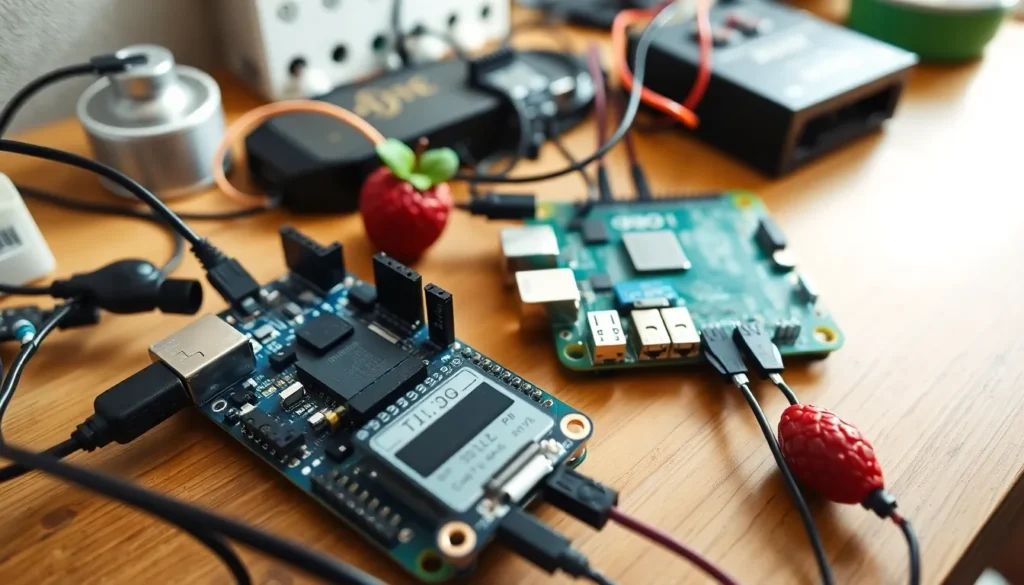
IoT controllers come in two main categories: hardware controllers and software controllers. Each type plays a unique role in managing smart devices within a network.
Hardware Controllers
Hardware controllers include physical devices that govern IoT applications. These controllers often feature microcontrollers or single-board computers, acting as the brains of connected ecosystems. Common examples include Arduino boards and Raspberry Pi units. Most hardware controllers provide direct connections to sensors and devices, enabling low-latency communication. They frequently support multiple protocols, such as Zigbee and Z-Wave. Designed for flexibility, these controllers often allow users to build and customize their IoT solutions effectively.
Software Controllers
Software controllers operate as applications or platforms that manage IoT devices through code. They primarily function on cloud services or local servers, enabling users to access and control devices remotely. Many modern software controllers support integrations with various APIs, ensuring compatibility with a wide array of devices. They often come equipped with advanced analytics tools that help monitor device performance and user behavior. Popular software solutions include home automation platforms like Home Assistant and open-source frameworks. These controllers enhance user control and streamline IoT device management efficiently.
Key Features Of IoT Controllers
IoT controllers encompass several key features that enhance their functionality and integration within smart ecosystems. These features include scalability, security, and connectivity.
Scalability
Scalability defines how well an IoT controller can manage increasing numbers of devices. As smart homes or industrial setups grow, controllers must adapt to support new devices seamlessly. Robust architectures enable easy addition of sensors, cameras, or appliances without sacrificing performance. Both hardware and software controllers often provide this feature, allowing users to scale their systems flexibly. Increasing device counts can occur without major system overhauls or extensive reconfiguration, making scalability a critical consideration for future-proofing IoT installations.
Security
Security plays a crucial role in the functionality of IoT controllers. These controllers manage sensitive data and device interactions that require robust protection against unauthorized access. Implementing encryption methods ensures data privacy during transmission between devices. Controlling access to the network also helps maintain security, with authentication methods safeguarding connections. Monitoring device health provides users with alerts related to potential security breaches or anomalies. As technology evolves, enhanced security measures such as AI-driven threat detection further bolster the resilience of IoT ecosystems.
Connectivity
Connectivity highlights the ability of IoT controllers to facilitate communication between diverse devices. Various communication protocols such as MQTT, CoAP, Zigbee, and Z-Wave are supported. Flexibility in connectivity ensures that different devices can work together harmoniously, regardless of brand or type. Controllers equipped with multiple protocol support can connect a wide range of devices seamlessly. This interoperability enhances user experience by allowing centralized management of devices through mobile apps or web interfaces. Smooth communication translates into effective coordination, optimizing operational efficiency across smart ecosystems.
Applications Of IoT Controllers
IoT controllers find diverse applications across various sectors, enhancing automation and connectivity.
Smart Home Systems
Smart home systems exemplify the primary use of IoT controllers. These controllers manage devices like smart lights, thermostats, and security cameras. They allow homeowners to automate routines based on preferences and save energy. For example, a user can schedule lights to turn off at night while adjusting thermostat settings automatically. Integration with voice assistants streams user interaction, further simplifying control. Each device communicates through the IoT controller, ensuring seamless operation throughout the home. The ability to monitor energy consumption enables families to manage usage effectively, contributing to cost savings and environmental benefits.
Industrial Automation
Industrial automation represents another critical application of IoT controllers. In factories, controllers optimize machine operations by monitoring performance in real-time. Sensors relay machinery data to the controller, allowing for proactive maintenance and reduced downtime. For instance, controllers can detect anomalies in equipment functioning and alert operators instantly. This feature minimizes costly repairs and enhances operational efficiency. Additionally, factories utilize IoT controllers to streamline supply chain management and improve asset tracking. As a result, companies experience increased productivity and reduced operational costs, showcasing the pivotal role of IoT controllers in industrial environments.
The IoT controller stands at the forefront of smart technology, enabling seamless interaction among devices while enhancing user convenience and security. Its ability to integrate various protocols ensures that everything from home appliances to industrial machinery operates in harmony. As technology continues to advance, IoT controllers are becoming smarter and more efficient, incorporating AI for improved automation and predictive capabilities.
With a focus on scalability and security, these controllers are essential for anyone looking to optimize their smart ecosystem. Whether in a home or industrial setting, the right IoT controller can significantly transform how users manage their devices, leading to a more connected and efficient future.